


At Astrobotic, we’ve always believed that mobility unlocks discovery. Today, that belief takes a major step forward as our first flight CubeRover is integrated with Griffin for its journey to the Moon as part of the BEACON mission
Astrobotic’s 2U CubeRover is a shoebox-sized rover that packs a punch for meaningful work on the Moon, enabling lunar science. Backed by NASA’s Small Business Innovation Research (SBIR program), CubeRover is a true success story: through Phase II awards and a Tipping Point contract, our team advanced the system from TRL 4 to TRL 6 in just eight months.

Getting a rover to that point requires working through a long list of constraints. Mass is tight, power is limited, and every component must survive launch loads and the lunar environment. That means wide temperature swings, abrasive dust, vacuum, and radiation. Wheels and traction all behave differently in lunar regolith, especially when you’re working with a smaller-class vehicle. Thermal design is just as critical as structural design on a spacecraft. Without an atmosphere, heat can’t escape like it does on Earth: you can’t just use a fan to cool the electronics. On the Moon, heat must be managed through conduction and radiation alone. That’s why we rely on advanced materials to radiate excess heat into the cold of space. At the same time, keeping the rover warm on its journey requires careful power management, heaters, and insulation layers like specialized Mylar blankets.
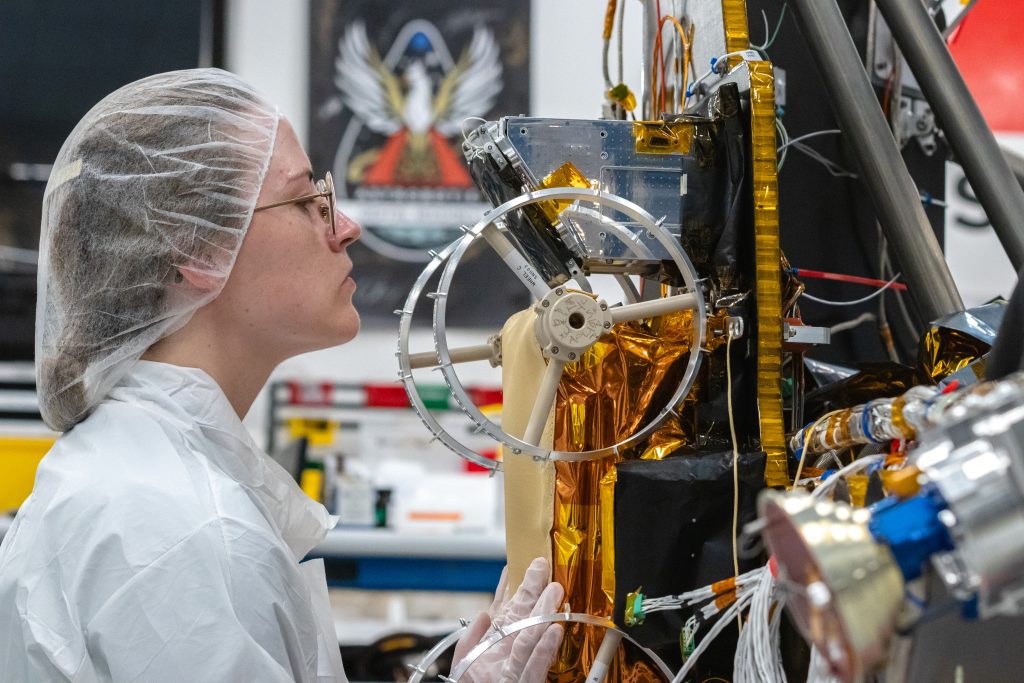
Next, there’s the process of proving it all works. Flight qualification includes vibration and shock testing to simulate launch, thermal vacuum testing to replicate space and lunar conditions, and end-to-end system tests to make sure the rover can operate as expected once it’s deployed. The software and communications systems must be reliable and recover automatically from off-nominal situations, since the rover will operate without human intervention to reposition the rover once it’s on the surface.
CubeRover is built to be modular, which allows us to swap payloads, iterate on subsystems, and adapt to different missions without starting from scratch. That flexibility is part of what makes it a practical platform for frequent lunar use.
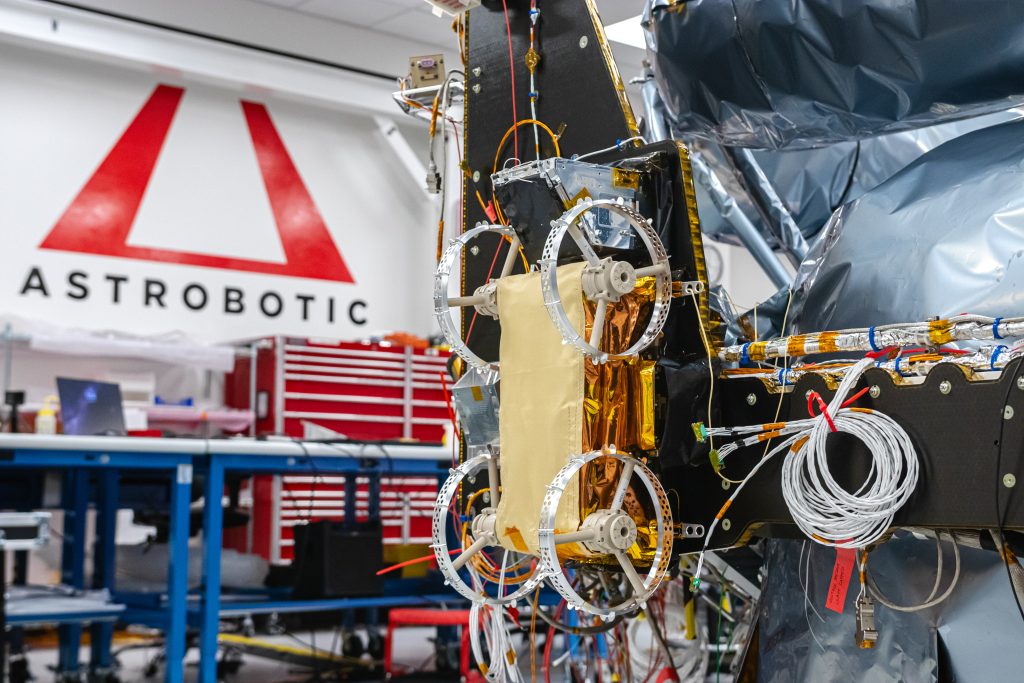
Flying aboard Griffin-1, CubeRover marks a major milestone for Astrobotic and our modular CubeRover line. This mission is a joint mission demonstration with a Canadian company, Mission Control, called BEACON, which pairs Astrobotic’s CubeRover-1 with Mission Control’s Spacefarer™ platform. Together, they enable real-time commanding and monitoring of CubeRover on the Moon and bring a new level of interactivity and precision to lunar exploration.
BEACON is our first flight demonstration of the CubeRover product line, showcasing Astrobotic’s capabilities for vertical rover/lander integration. It’s also testing critical technologies for surviving the Moon’s harsh nights, including long-range communications that don’t rely on the lander to relay data back to Earth.
In addition, BEACON will gather key thermal data to validate our approach for future night survival operations. This early demonstration lays the groundwork for rovers that can endure the extreme lunar environment, extending the reach of human knowledge and robotic exploration on the Moon.